
The clearest signs you need electrical rewiring are breakers that trip repeatedly, lights that dim when appliances start, burning or buzzing smells near outlets, and warm or discolored switch plates. Any one of these means the wiring behind your walls is struggling, and the risk compounds the longer you wait.
Older homes across Southeast Idaho often carry wiring never designed for modern electrical load. Many homeowners miss the early signals until something fails outright. Here's how to read those signals before they become a fire hazard.
7 Warning Signs You Need Electrical Rewiring
The clearest signs you need electrical rewiring are breakers that trip repeatedly, lights that dim when appliances start, burning or buzzing smells near outlets, and warm or discolored switch plates. Any one of these means the wiring behind your walls is struggling, and the risk compounds the longer you wait.
Older homes across Southeast Idaho often carry wiring never designed for modern electrical load. Many homeowners miss the early signals until something fails outright. Here's how to read those signals before they become a fire hazard.

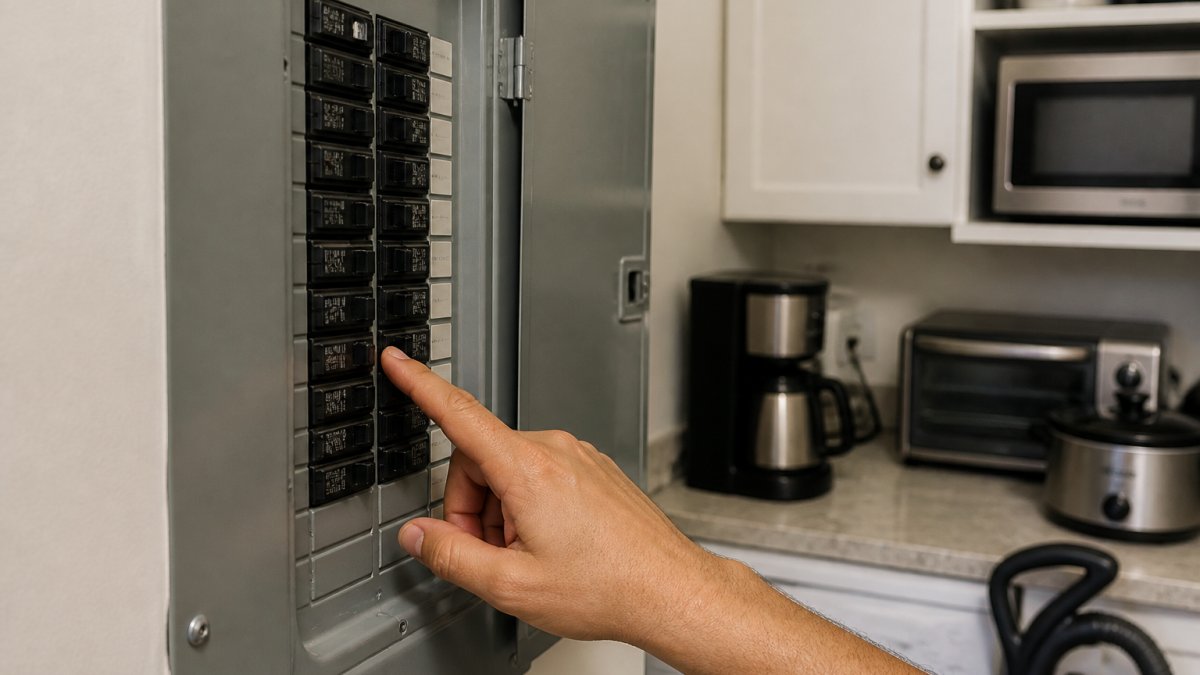
Frequent Blown Fuses and Tripped Breakers
A breaker that trips once during a storm is normal. One that trips every time you run the microwave and AC together means the circuit is overloaded or the wiring can no longer carry its rated amperage.
A bigger panel doesn't solve everything if the branch circuits behind it are undersized or degraded. Persistent tripping usually points to overloaded circuits, a failing breaker, or insulation degradation inside the walls.
Dimming or Flickering Lights
Lights that dim when the refrigerator kicks on signal voltage drop, the wiring can't deliver steady current under load. In older properties, this traces back to undersized conductors, loose connections, or corroded aluminum wiring at the terminals.
Flickering is different from dimming. Flickering suggests a loose neutral or a failing connection, and loose connections generate heat. Heat is what starts fires.
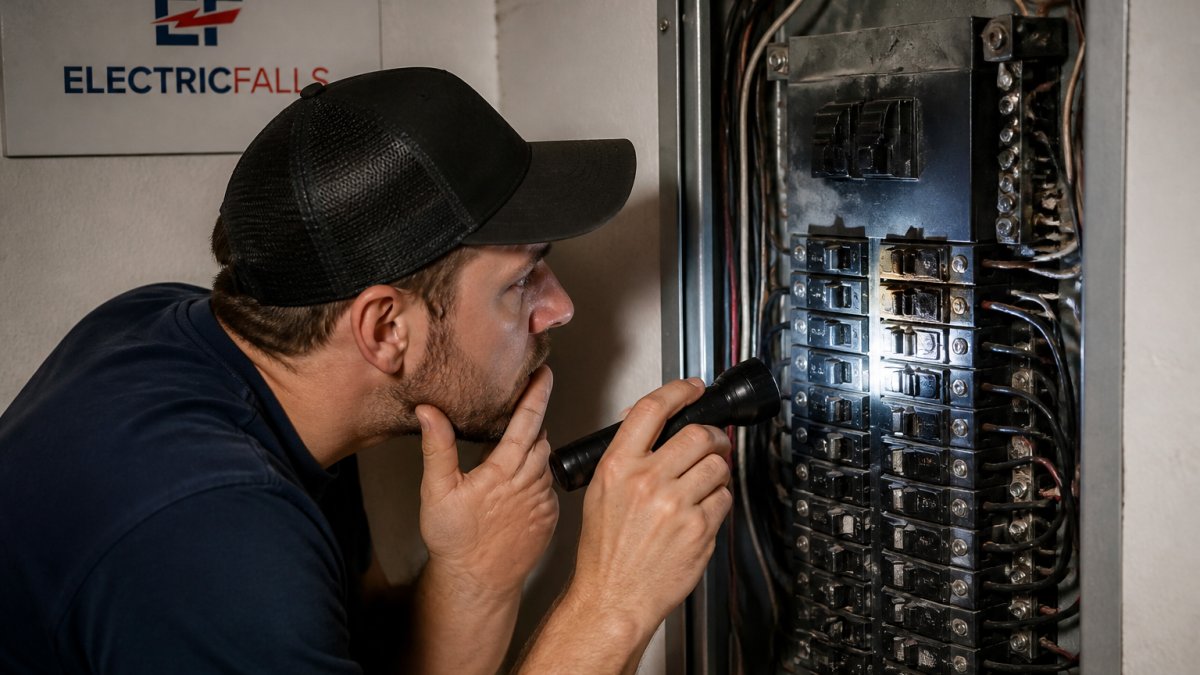
Burning Smells, Smoke, or Buzzing Sounds
A burning smell near an outlet or switch is never normal, nor is buzzing or sizzling from a receptacle, fixture, or panel. Those sounds signal arcing, where current jumps a gap and produces intense localized heat.
Discolored or Warm Outlets and Switches
Warm switch plates and brown scorch marks mean heat is building where it shouldn't. Discoloration is the residue of repeated overheating and usually appears before visible damage to the device. A common mistake is replacing the outlet and calling it fixed. The device isn't the problem. The connection behind it, or the wiring feeding it, is.
Two-Prong Outlets and Missing GFCI Protection
Two-prong outlets mean the circuit has no equipment ground, a hallmark of older wiring. Without a ground path, a fault has nowhere safe to go, raising shock risk for anyone touching an appliance or metal fixture.
GFCI protection is required in bathrooms, kitchens, garages, and outdoors under current electrical codes. If your home has none of these devices, that's a gap worth closing regardless of the wiring's age. The U.S. Consumer Product Safety Commission guidance on electrical safety outlines how ground-fault protection reduces electrocution risk in wet areas.
How to Prevent Power Surges in an Older Home
Surge protection is not a substitute for rewiring. A surge protective device manages voltage spikes but does nothing about degraded insulation, undersized conductors, or loose terminations, the conditions that actually start fires.
Still, older homes face elevated surge exposure, and there are concrete steps worth taking while you decide on a rewiring scope.
The rewiring connection: if your panel is a known-hazard model, circuits are ungrounded two-wire runs, or devices repeatedly fail after surges, the surge problem is a symptom of a wiring problem. Adding protection without fixing the cause just delays failure.
For homes not ready for a full rewire, install a whole-home surge protection device, verify grounding, and prioritize rewiring circuits feeding sensitive electronics and high-load appliances first. That gets you protection now and a path to a permanent fix.
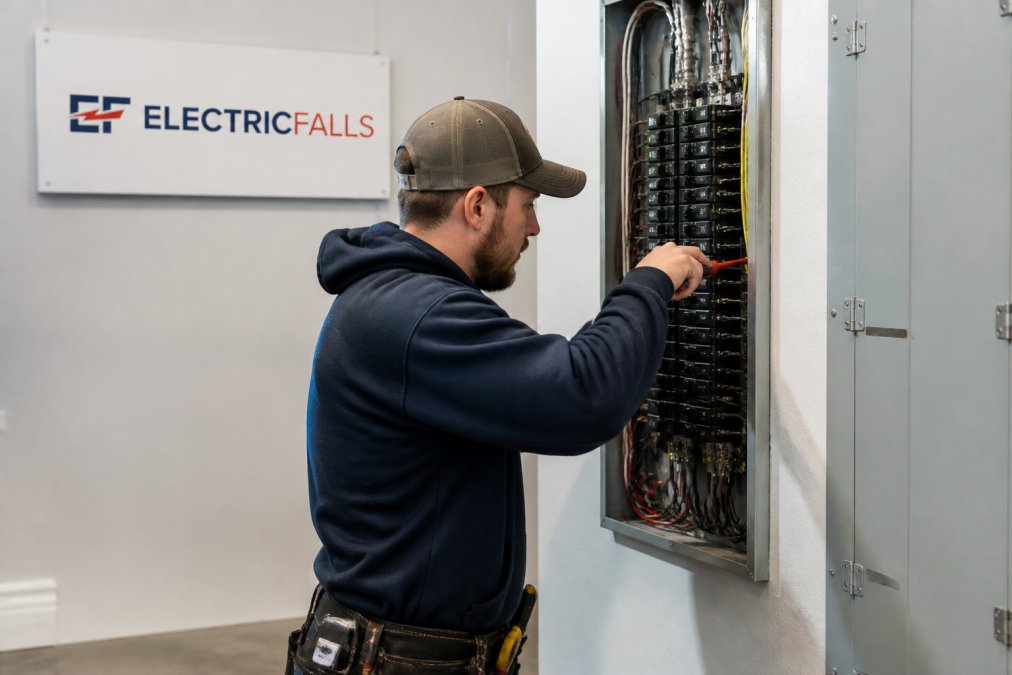
Electrical Panel Upgrade Requirements You Should Know
An electrical panel upgrade is often required when the existing panel can't safely carry the home's load, is a known-hazard model, or you're adding a large circuit such as a hot tub, spa, EV charger, or generator. Modern heat pumps, induction ranges, and backup power systems routinely exceed what a 1970s panel was built to handle.
Panel work is governed by local building codes and requires an electrical permit and inspection in most jurisdictions. The National Fire Protection Association overview of NFPA 70, the National Electrical Code sets the baseline that local amendments build on. Requirements vary by jurisdiction, so confirm the specifics with your local authority before scheduling work.
Smart home devices add another wrinkle: many need a neutral wire at the switch box, and older switch loops often lack one. That affects how much of the system you can modernize without rewiring those runs.
Partial vs. Full Rewiring: Which Makes Sense for Your Home?
Partial rewiring makes sense when problems are isolated to specific circuits or rooms. Full rewiring is right when the wiring itself is the hazard, such as degraded knob-and-tube or failing aluminum branch circuits throughout the home.
Insurance and Smart Home Compatibility with Old Wiring
Insurance carriers increasingly ask about wiring age and type during underwriting, and some surcharge or decline coverage on homes with knob-and-tube or aluminum branch circuits. Most homeowners don't discover this until they file a claim or shop for a new policy.
Smart home compatibility hits the same wall: smart switches, dimmers, and thermostats assume a grounded circuit and a neutral wire at the box, and older two-wire systems often lack both.
Older wiring doesn't fail on a schedule, and the warning signs rarely announce themselves twice. If any of the signals above sound familiar, the safest next step is a professional inspection rather than another patch. Electric Falls has over eight years of experience helping homeowners and property managers across Southeast Idaho diagnose these problems, from residential rewiring and panel upgrades to whole-home surge protection and generator installations. Our licensed and insured team works to current electrical codes and provides an honest assessment of what your home needs. Get a quote from Electric Falls and find out what's really going on behind your walls.
Frequent Blown Fuses and Tripped Breakers
A breaker that trips once during a storm is normal. One that trips every time you run the microwave and AC together means the circuit is overloaded or the wiring can no longer carry its rated amperage.
A bigger panel doesn't solve everything if the branch circuits behind it are undersized or degraded. Persistent tripping usually points to overloaded circuits, a failing breaker, or insulation degradation inside the walls.
Dimming or Flickering Lights
Lights that dim when the refrigerator kicks on signal voltage drop, the wiring can't deliver steady current under load. In older properties, this traces back to undersized conductors, loose connections, or corroded aluminum wiring at the terminals.
Flickering is different from dimming. Flickering suggests a loose neutral or a failing connection, and loose connections generate heat. Heat is what starts fires.
Burning Smells, Smoke, or Buzzing Sounds
A burning smell near an outlet or switch is never normal, nor is buzzing or sizzling from a receptacle, fixture, or panel. Those sounds signal arcing, where current jumps a gap and produces intense localized heat.
Discolored or Warm Outlets and Switches
Warm switch plates and brown scorch marks mean heat is building where it shouldn't. Discoloration is the residue of repeated overheating and usually appears before visible damage to the device. A common mistake is replacing the outlet and calling it fixed. The device isn't the problem. The connection behind it, or the wiring feeding it, is.
Two-Prong Outlets and Missing GFCI Protection
Two-prong outlets mean the circuit has no equipment ground, a hallmark of older wiring. Without a ground path, a fault has nowhere safe to go, raising shock risk for anyone touching an appliance or metal fixture.
GFCI protection is required in bathrooms, kitchens, garages, and outdoors under current electrical codes. If your home has none of these devices, that's a gap worth closing regardless of the wiring's age. The U.S. Consumer Product Safety Commission guidance on electrical safety outlines how ground-fault protection reduces electrocution risk in wet areas.
How to Prevent Power Surges in an Older Home
Surge protection is not a substitute for rewiring. A surge protective device manages voltage spikes but does nothing about degraded insulation, undersized conductors, or loose terminations, the conditions that actually start fires.
Still, older homes face elevated surge exposure, and there are concrete steps worth taking while you decide on a rewiring scope.
The rewiring connection: if your panel is a known-hazard model, circuits are ungrounded two-wire runs, or devices repeatedly fail after surges, the surge problem is a symptom of a wiring problem. Adding protection without fixing the cause just delays failure.
For homes not ready for a full rewire, install a whole-home surge protection device, verify grounding, and prioritize rewiring circuits feeding sensitive electronics and high-load appliances first. That gets you protection now and a path to a permanent fix.
Electrical Panel Upgrade Requirements You Should Know
An electrical panel upgrade is often required when the existing panel can't safely carry the home's load, is a known-hazard model, or you're adding a large circuit such as a hot tub, spa, EV charger, or generator. Modern heat pumps, induction ranges, and backup power systems routinely exceed what a 1970s panel was built to handle.
Panel work is governed by local building codes and requires an electrical permit and inspection in most jurisdictions. The National Fire Protection Association overview of NFPA 70, the National Electrical Code sets the baseline that local amendments build on. Requirements vary by jurisdiction, so confirm the specifics with your local authority before scheduling work.
Smart home devices add another wrinkle: many need a neutral wire at the switch box, and older switch loops often lack one. That affects how much of the system you can modernize without rewiring those runs.
Partial vs. Full Rewiring: Which Makes Sense for Your Home?
Partial rewiring makes sense when problems are isolated to specific circuits or rooms. Full rewiring is right when the wiring itself is the hazard, such as degraded knob-and-tube or failing aluminum branch circuits throughout the home.
Insurance and Smart Home Compatibility with Old Wiring
Insurance carriers increasingly ask about wiring age and type during underwriting, and some surcharge or decline coverage on homes with knob-and-tube or aluminum branch circuits. Most homeowners don't discover this until they file a claim or shop for a new policy.
Smart home compatibility hits the same wall: smart switches, dimmers, and thermostats assume a grounded circuit and a neutral wire at the box, and older two-wire systems often lack both.
Older wiring doesn't fail on a schedule, and the warning signs rarely announce themselves twice. If any of the signals above sound familiar, the safest next step is a professional inspection rather than another patch. Electric Falls has over eight years of experience helping homeowners and property managers across Southeast Idaho diagnose these problems, from residential rewiring and panel upgrades to whole-home surge protection and generator installations. Our licensed and insured team works to current electrical codes and provides an honest assessment of what your home needs. Get a quote from Electric Falls and find out what's really going on behind your walls.
Look for frequent tripped breakers, flickering lights, warm or discolored outlets, burning smells, and buzzing sounds. If your home has knob-and-tube or aluminum wiring, or two-prong outlets without ground, those are strong indicators. A licensed electrician can perform a full inspection to confirm whether electrical rewiring is necessary.
Sometimes. If your wiring is in good condition and meets current codes, a panel upgrade alone can resolve capacity issues. However, if the existing wiring is degraded or undersized, a new panel won't fix underlying problems. An electrician will assess your wiring integrity before recommending the right approach.
Aging insulation, loose connections, and overloaded circuits can cause arcing and short circuits, which are leading causes of electrical fires. Knob-and-tube and aluminum wiring are particularly risky. Regular inspections and timely electrical rewiring significantly reduce these hazards.
The cost of electrical rewiring varies based on home size, wiring type, accessibility, and local labor rates. For a 2,000 sq ft home, pricing depends on whether you need partial or full rewiring and if panel upgrades are required. Contact Electric Falls for a personalized quote based on your specific situation.

What an excellent experience! I highly recommend this company! from first contact, through quoting, modifications to scope, ordering materials, installation and follow through, there was not a single minute that I didn't know exactly what was going on. The communication, product and service were all impeccable. A+

Gerry T.


Dustin came over to our house and helped us hook up a hot tub. His quote was well below others that we had come over and he was super easy to work with. I would recommend electric falls to anyone who needs a great electrician at an affordable cost!

Hailey W.
These guys are awesome. More than fair pricing, punctual and professional! Highly recommend!

Jim C.
Quick response and fixed the problem efficiently. Would use him again with any needs.

Christine P.
We had a great experience with Electric Falls. We had a need to replace an old fuse box with a breaker box. Dustin was quick to respond, was reasonable in his quote, and did exceptional work. We were pleased with his coordination with us and with Idaho Falls Power. He performed the work when he said he would do it and completed the work within the timeframe that was estimated. Overall, we are extremely satisfied with Electric Falls and will be calling on them again for future needs.

Paul M.
I can not say enough good things about these guys. They got to me so quickly, were incredibly nice, and handled my problem right away. 10/10 would recommend

Whitney P.
Dustin is everything you wish for in every small business owner! He went above and beyond right out of the gate by coming by to do my quote in the evening when he was leaving for a long weekend the next morning. He explained everything about the quote. Price was fair for work being done. He and Cameron showed up as promised and did quick, quality work. Highly recommend!

Robert N.
Dustin was professional from bid thru install of our emergency home generator. In the future I'm going to call for a bid to do the electrical install in our unfinished basement. I'm thinking I don't want you to know about him because he will become too busy to help me. But, go ahead and do with this review as you will but I'm keeping his name at the top of my contacts list. :-)

Korky F.
We had Dustin from Electric Falls come out and install the wiring for a hot tub as well as install a whole home surge protector. Dustin was awesome. He was super informative and got us all set up right away. We are so thrilled that we found a great and reliable electrician. His workers were awesome as well. They were very helpful.

Todd R.
Wonderful customer service and very professional yet personable technicians.
Said what they would do and for how much and they did it
Thank you for all your work

Earl L.
Quick and Efficient! Was able to find the problem and get it all taken care of within the same day so we had our power and utilities working properly again.

Abigail J.
We had Electric Falls run some electricity to our newly built shed. It required trenching the yard to bury some of the lines. They did an awesome job! They were right on time and cleaned everything up. The end price was the exact amount quoted! We will be calling on them again!

Steve C.
Dude was the best, mega polite, answered literally every question we possible had. Pricing was fair and straightforward. He came right away and got out power back up.

Alex M.
What a great job! Electric Falls were professional, quick, knowledgeable and kind. It’s was my first project with them and I will have many more to come. They will be my first choice all things electrical from here on out. Keree 💝❤️🙏

Keree A.
Great to work with! Very knowledgeable, great at explaining the issue, and got the job done fast!

Ryan S.
Dustin was at our home this morning to repair several light issues. He was here on time, got the job done quickly and made several helpful suggestions for upgrades in our home as it is over 40 years old. Very professional and knowledgeable. Will use again.

Dennis B.
These folks worked with me on a very short timeline, even did the job on Sunday. Price was explained in detail and was very reasonable. They went above and beyond to take care of me. I would highly recommend them for any of your electrical or generator needs.

AC
Great service and a good recommendation to solve my problem!

Andy E.
Great friendly, professional, and local service. Prompt scheduling and arrived as promised! Diagnosed my electrical problem quickly and resolved the issue for a fair price.

David S.
Electric falls responded quickly and they worked with me to get my house in much better shape. Dustin was very knowledgeable, the cost for the services were reasonable and he finished everything very quickly.

Katrina S.
Great Service!

Richard J.
Dustin and Cameron came to look and see what they needed to hook up our garbage disposal, and within 30 minutes they had put in a new outlet and hooked up the disposal to a switch. Very kind and respectful gentleman who make electrical problems a breeze for a fair price.

Marissa H.
Super fast and very friendly!

Mackenzie J.
They are very good to work with. Always called to let me know exactly when they were coming. Came on time and finished earlier than expected.

Laura M.
Dustin was recommended to me and within a few hours of calling him he was out to my house in Shelley and fixed the issue. The cost was fair and Dustin was so kind and professional. He was able to work with my schedule and even let me know when he was on his way. Highly recommend if you are in need of an electrician.

Jenna H.
Highly recommend these guys. Cameron and Dustin were fast and efficient and answered all our questions we installed a home surge protector because recently the power went out and blew our furnace.

McKinzi M.
This company is amazing! Very professional and great to work with. I would highly recommend them to anyone.

Justin R.
Very personable service. We had a couple of light fixtures changed out to ceiling fans, had a fan installed in a bathroom and a few other light switch modifications done and the work was very good! And they cleaned up any mess well! Would recommend using them.

Susan M.
Dustin was great to work with. Their pricing was fair, they were great to communicate with, and they were prompt to get the work done with a schedule that worked great for me.

Kelly S.
Highly recommend Electric falls, they came out next day, gave us a couple of options with what works in our price range, and got us squared away extremely fast. We will definetly be calling them again very soon for some future needs. Thank you for everything.

Casey D.
Communicated very well. Friendly and easy going. He worked with my schedule. Lead time was only a couple of weeks. I look forward to using his service on the next step of my project.

Andrew M.
Dustin solved our electrical problems with one call. His response was quick and the cost was reasonable. We're very satisfied.

Frank W.
Since I used to DO this work and medically can’t do it myself, it gives me great pleasure to say that ElectricFalls.com will give you the same professional, ethical and proper service to you when you need electrical work done that they gave me. And will give me in my next project.No job too big or too small, all you need to do is ASK.

Carol B.
We had an electrical issue with a heater in our downstairs toy room. We called Dustin Thurman of Electric Falls, and he came out that same day; he was able to diagnose the problem and fix it quickly and completely. He explained what he thought was probably the problem, and it turned out to be exactly that. He was courteous and professional, explained everything to us, including how to avoid the problem in the future, and we would not hesitate to call Dustin again for any electrical problem. We would highly recommend him to friends and family.

Gail I.
This was a great experience! We called around and didn't get call backs from anyone. We needed a EV charger installed. Electrical Falls answered immediately made it out to our home for a quote within an hour. We agreed on a honest and fair price. Install was done properly and within a time frame that worked perfect for us! Thank you Electric falls you will be our first call in the future and will be highly recommended!

Marcelino S.
Electric Falls was prior in getting back to me and did a quick great job with my electrical needs. Very friendly and really well priced!

Zoey C.
Excellent work and cleans up after the work as well! Plus, Dustin was on time, courteous and friendly. I would have them do more work for me anytime I need it.

Mary Ann C.
Dustin with Electric Falls was absolutely amazing to work with. He answered all our electrical questions while buying a home, and then helped us fix them after closing. His flexibility and kindness made him super easy to work with. I would recommend him for any job, and we will be utilizing him for future projects on our new home. Such a great experience!!
.svg)
Danielle S.
Dustin has helped us with several electrical jobs and knocks it out of the park every time. He is efficient, professional, friendly, and cleans up after he's done – not many do this these days! If and when we need more work done we will never hesitate to call Dustin at Electric Falls. Thanks

Madeline
Prompt, efficient, knowledgeable, tidy, honest, friendly, reasonable rates. After all the electricians we have tried, Dustin at Electric Falls is by far the best in every way. I will never call anyone else ever again for our electric needs.
.svg)
Debbie H.
Dustin is very responsive, he's a great communicator, and he is reasonably priced. I have hired him for four separate jobs in the last four months, and I plan to hire him for more jobs in the future.

Russell P.
Dustin is great to work with and very fast. He squeezed me in very quickly and worked quickly and efficiently until it was done. Also reasonably priced. I would highly recommend Electric Falls
.png)
Rachael J.
Dustin jumped in and took amazing care of us on short notice! He was able to squeeze us in and took care of business quickly and efficiently without overcharging. We are so appreciative of the work he did! If you ever need a great electrician to help you with your home, whether a new build or a place you’ve been in for years, Dustin is your guy! Give him a call; you won’t be disappointed!!!
.svg)
Jarod P.
Dustin has great customer service and is a knowledgeable electrician. He fixed our wall heater, installed a ceiling fan, and corrected some crossed wires on a two-way switch. He also checked out some outlets I had concerns with. He was friendly and professional. I highly recommend.

Amanda G.
Electric Falls is professional,friendly, and fair priced! We will definitely be using them for all our electrical needs in the future.
.svg)
Chandler L.
Great company to work with for any electrical needs you have. On time, professional, fair pricing and very knowledgeable. We will definitely use them again!!
.svg)
Heather K.
If you're looking for a competent, courteous, and thorough electrician, look no further. Dustin definitely exceeded all of our expectations!
.png)
Mike G.
Very knowledgeable and professional. Would recommend to others.
.png)
Trena T.
Dustin was very pleasant and did an excellent job
.svg)
Robert T.
Dustin does excellent work!! Quick, efficient. Very flexible!!
.svg)
Lance L.
Very knowledgeable and professional service. I will be using him again and will definitely recommend him to others.
.png)
Donna T.
Dustin is professional, timely, and friendly.
.svg)
DJ D.
They were prompt and did a good job.
.svg)
Wood F.
Outstanding service, not waiting, answers inquiries fast and to the point.
.png)
Rubi F.
Very happy with their work.
.png)
Glenn W.
We lost all Power at the last outage. It fried our panel and breakers. We also lost a thermostat. He replaced all of that plus put a surge protector so we wouldn't have that problem again. He was very professional and explained things very well along with price before doing anything. I would definitely use them again for electrical problems. I trust them and so can you.
.svg)
Bonnie M.
Thank you!
Positive Quality, Professionalism
.png)
Cody F.
Fan installation, Light fixture repair, Electrical outlet & switch installation
.png)
Darin T.

© Electric Falls. All Rights Reserved.
Welcome to Electric Falls, where our commitment to excellence in electrical services has been illuminating the Southeast Idaho community for several years.


.svg)








.png)
.png)
.png)
.png)